quasi
Report This Comment
Date: July 29, 2026 01:54PM
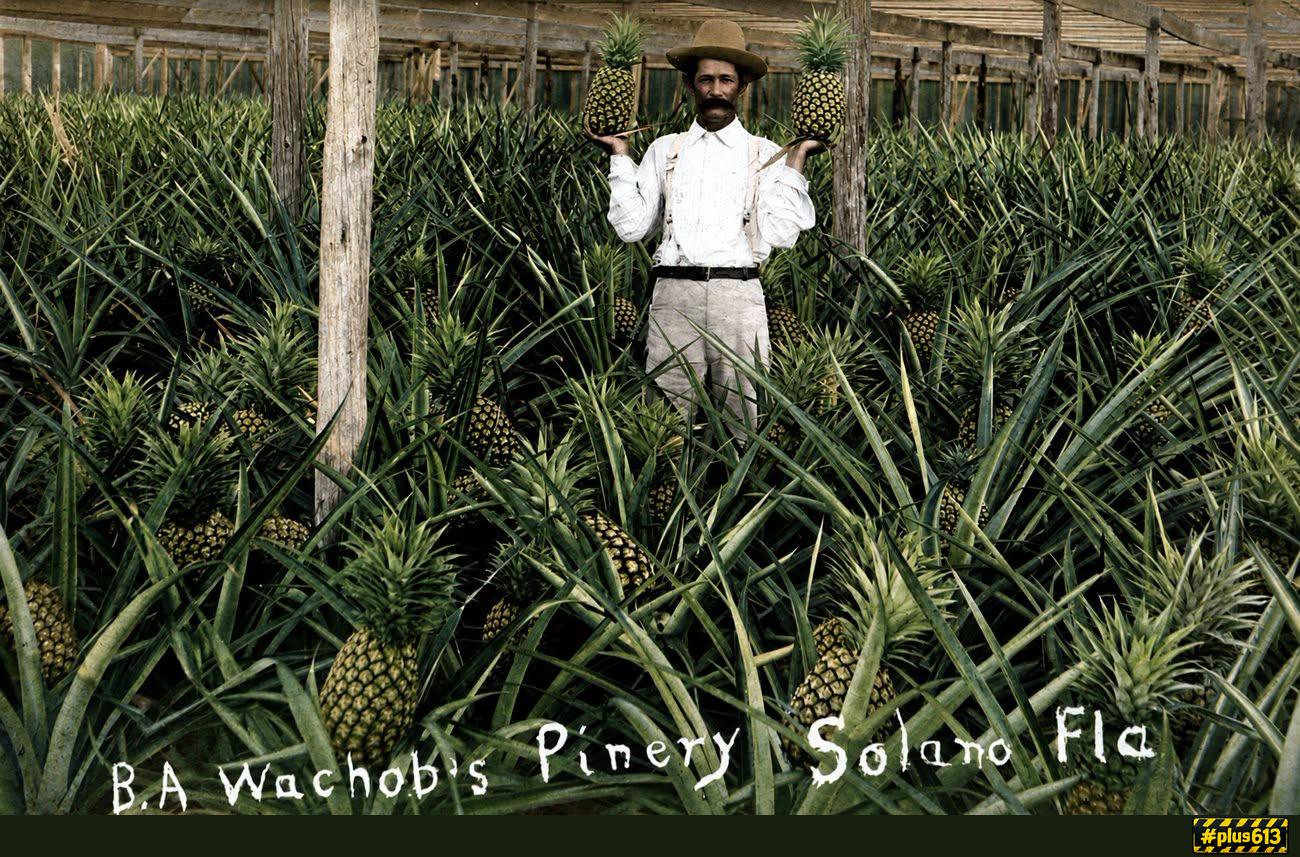
"1908, Burris Alexander Wachob the first man to grow pineapples commercially in Solana (Punta Gorda), Charlotte county
The overhead wooden structure seen in the photo is a "slat house" or "shed." Growers built these lattice roofs to protect the delicate pineapple plants from direct, scorching midday sun and frost.
Before Hawaii dominated the global market, Punta Gorda was a major supplier of pineapples to the United States. The local industry thrived extensively from roughly 1890 until a combination of severe frosts, soil depletion, and competition from Cuba and Hawaii brought the era to a close by the 1920s.
Burris was born in 1861 in Florida to Francis Marion Wachob and Mary Jane Swails. His family was among the early settlers of the Florida peninsula long before it underwent modern development
By 1914, as the local pineapple industry scaled up to attract major out-of-state capital, Wachob stepped up as a core board member of a newly formed regional agricultural corporation alongside other prominent local leaders like T.C. Crosland.
Wachob's pineries specialized in growing the Smooth Cayenne variety. This was a massive, premium pineapple that required the intensive, shaded "slat house" cultivation style captured in the photograph."
quasi
Report This Comment
Date: July 29, 2026 02:00PM
I'm thinking there should be a return of the pineapple industry here with solar panels instead of the old sheds. Freezes have become far less frequent in the last three decades and the sun remains brutal but full of energy.

woberto
Report This Comment
Date: July 30, 2026 03:35AM
According to the interweb,
Flo-rida's top 3 are;
Citrus
Sugarcane
Tomatoes
👍
You are full of good ideas quasi but it's so much cheaper to pineapples from a shit hole country with forced labour or a well managed poverty system (fancy a holiday in Costa Rica?).
😎
If only there was a political party that prioritised Made in the USA regardless of what the rest of the world thinks...
quasi
Report This Comment
Date: July 30, 2026 10:11AM
The citrus industry here has gone to shit because of citrus greening, back-to-back hurricanes, and development so much of the stuff on the shelf is now imported. Made in the USA is fine, but in the real world it's better to have producers of products in more than one place. Having all your eggs in one basket risks breaking them all and growing all your pineapples or citrus in one place risks losing them to disease or disaster.
pulse
Report This Comment
Date: July 30, 2026 11:58AM
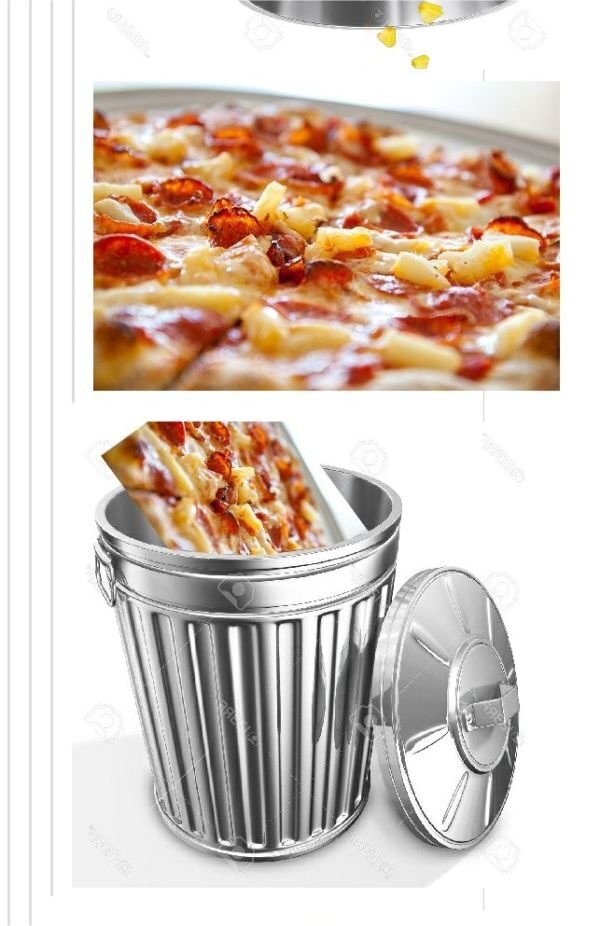
Imagine spending all that effort on growing a fruit which then ends up on pizza, turning the pizza directly into garbage?
woberto
Report This Comment
Date: July 31, 2026 02:53AM
Early 1900's when Hawaii boomed there was a taste attributed to the lining inside the can. As technology improved and better, safer linings were introduced, they had to synthesise this taste and add it to the pineapple contents because consumers were so familiar with it and thought it suspicious when the flavour changed.
Fucken consumers!
quasi
Report This Comment
Date: August 07, 2026 06:04PM
This idea of mine to use solar panels in a similar way to the slat sheds over pineapples over a century ago wouldn't leave me alone so I contacted the professor in charge of horticulture at the University of Florida who thought enough of my idea to forward my inquiry down his "chain of command" so to speak and as I hoped there have been studies underway in conjunction with Florida Power and Light along these lines with other crops. Maybe my idea will go somewhere, maybe it won't, but if the person in charge of these studies was unaware of the means of raising pineapples in my little corner of the world back in the day he isn't anymore, and maybe the idea won't leave him alone. At least these PhD Professors weren't dismissive and were cordial and accepting of some guy with time on his hands and a bee in his bonnet. Here's my email that found its way to the right person.
"I'm a 46 year resident of Charlotte County, Florida, now retired from the construction industry, and recently, almost simultaneously, came across some information regarding two of my interests, local history and green energy, that could be food for experimentation by someone there at the University more knowledgeable and capable than I am. (There's a pun in there as you'll see)
First the history which involves agriculture. You may be aware that in the late 19th and early 20th centuries there was a thriving business of growing pineapples in the aera east of Punta Gorda known as Solana. What I recently learned is that growers erected lattice roofed "slat houses" or "sheds" to protect some of the delicate plants from direct midday sun as well as winter frosts. This method was particularly beneficial for the Smooth Cayanne variety of pineapple. Unfortunately a combination of several severe frosts in a row, soil depletion, and competition from Cuba and Hawaii brought the profitability of growing pineapples to an end here by the 1920's. That is the food of the experiment.
Now enter the second thing I learned, the possible role of green energy in the form of solar panels being erected above the plants to protect them from the harsh direct sun and killing frost. I happened upon this idea when reading about vineyards in Australia using solar panels to partially shade the vines which produced better quality grapes and had the added benefit of the plants having a cooling effect on the panels which increases their efficiency. I found this has been repeated in several vineyards around the world, so why not at least study the possibility of doing this with pineapples and perhaps other crops here? Agrivoltaics give the land the dual purpose of producing food and energy and is becoming a worldwide field in which Florida could become a leader. Hopefully the University has already begun programs to explore this emerging technology and this will be another facet of the studies.
Locally, frosts and freezes have become less frequent while temperatures are reaching records more often, I've observed this myself over decades of working outside, so perhaps this is worth investigating now, finding out if it is economically viable on some scale or at least as a learning experience for students. I hope that you might consider my idea a worthwhile one.
Attached is a 1908 photo of Burris Wachob, the first pineapple grower in the area, in a slat house surrounded by a good looking crop. It's from the small article on local history that spurred my interest in this subject.
Note: I don't even like pineapple.
Sincerely,"
Edited 1 time(s). Last edit at 07/08/2026 06:05PM by quasi.
woberto
Report This Comment
Date: August 07, 2026 11:59PM

quasi
Report This Comment
Date: August 08, 2026 12:14PM
Here's the reply from the professor actually involved in the studies, Malek Hammami, PhD.
"Thank you for sharing this thoughtful idea. At UF's Tropical Research and Education Center, we have been working with FPL on a pilot agrivoltaics project to evaluate crop production under solar panels and the economic viability of these systems.
Our ongoing research examines crop performance, irrigation, light availability, and environmental conditions within solar facilities. While our work is ongoing, early results suggest that agrivoltaic systems may offer benefits such as additional production space, reduced shade-house costs by utilizing shaded areas beneath the panels, and potential water savings, while also presenting some operational and regulatory challenges.
Although we have not studied pineapple production specifically, we have conducted trials with dragon fruit that may provide relevant insights.
FPL recently released a short video highlighting the project: [ link to video]
I appreciate your interest in this emerging area of research and your thoughtful suggestion. As our work progresses, I would be happy to reconnect and hear your perspectives on the potential adoption of agrivoltaic systems in Florida.
Best regards,
Malek"
woberto
Report This Comment
Date: August 09, 2026 04:32AM
Get your kicks, on Route, 4 6.
Nah that doesn't sound right.
Because it's 66 not 46.